
ORIGINS
Indigenous people
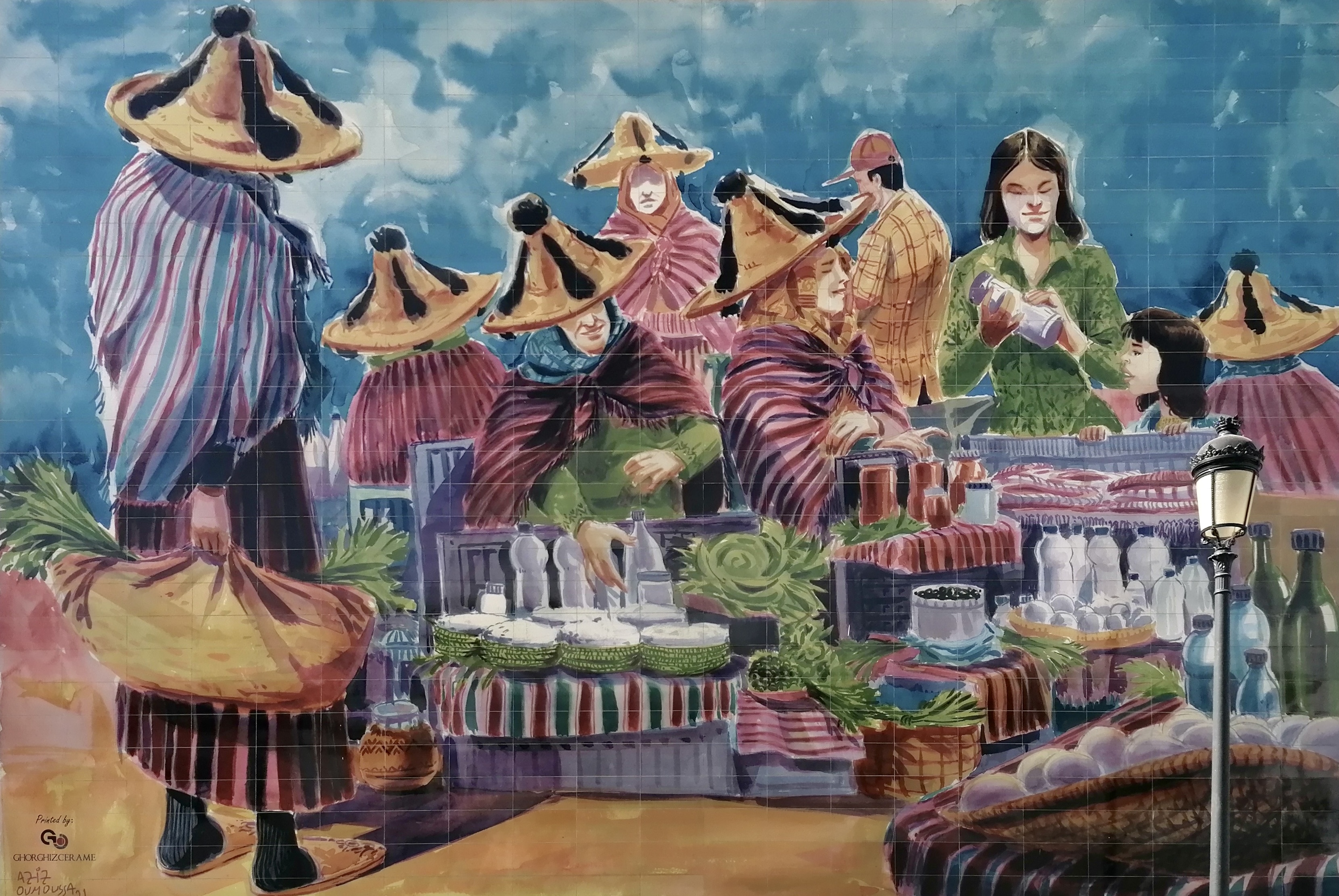
The Amazigh people are the indigenous population of North Africa. Their presence can be traced back 20,000 years. They can be found across a vast region extending from the Atlantic shores to East Africa (Egypt and Libya), and from the Mediterranean coast to the sub-Saharan area (Mali, Sudan, Mauritania). Over the centuries, they have established great dynasties that have left a lasting impact, such as the Almoravids (1055-1147), Almohads (1147-1269) – who both extended their influence to the iberian peninsula-, and the Merinids (1248-1465). The Imazighen (plural form of Amazigh) comprise a significant portion of the North African population, with Morocco being home to the largest proportion (40%), followed by Algeria (20%). Additionally, there exists an important Amazigh diaspora in other African countries and in Europe, particularly in former colonizing nations such as France and Spain. The Amazigh written language, known as Tifinagh, has gained official recognition in Morocco in more recent times (2011), following the “Arab Spring” and the subsequent socio-political movements. As a result, the presence of Amazigh culture and language in the public sphere has significantly increased. Notably, among the younger generations, there has been a growing movement of pride and reclamation as they seek to reconnect with their ancestral roots and preserve their rich heritage.
RESISTANCE

Unfailing resistance
The Imazighen have withstood numerous invasions, occupations, and colonizations, such as those by the Phoenicians, Carthaginians, Romans, Byzantines, Arabs, French, and Spanish. They have traversed a series of distinct circumstances, characterized by periods of prosperity and decline, territorial conquests and invasions, as well as alternating phases of expansion and contraction. Throughout these tumultuous periods, they have managed to preserve their cultural identity with great resilience and vitality. Nevertheless, they bear the heritage of the diverse metissage resulting from these historical human dynamics spanning millenia. The Imazighen consist of multiple sub-groups, such as the Rifan, Chleuh, Tamasheq, Kabyle, and others, each sharing significant similarities while also exhibiting certain linguistic, artistic, and traditional distinctions.
Prominent Amazigh anti-colonial figures include Dhiya and Abdelkarim El Khattabi, to name but two. Dhiya (also known as Al Kahina, the seeress) was an esteemed Amazigh queen and military leader. Dhiya demonstrated exceptional prowess in her resistance against the Arab conquest during the 7th century. Notably, she achieved a remarkable victory over the Umayyad forces in the Battle of Meskiana, ultimately establishing her uncontested rule over the entire Maghreb region. Despite her initial successes, however, she eventually suffered a decisive defeat in the Battle of Tabarka. As to Abelkarim El Khattabi, he was a prominent Amazigh political and military figure of the early 20th century who held the position of President of the Republic of the Rif in Northern Morocco, which he himself established. Abelkarim successfully led an extensive uprising, joined by a coalition of Riffian tribes, against the French and Spanish colonization of the Rif region. Renowned for his strategic guerrilla tactics, including pioneering the use of tunneling as a modern warfare technique, he is said to have directly influenced other iconic revolutionary figures such as Che Guevara.
ART
Symbolic art
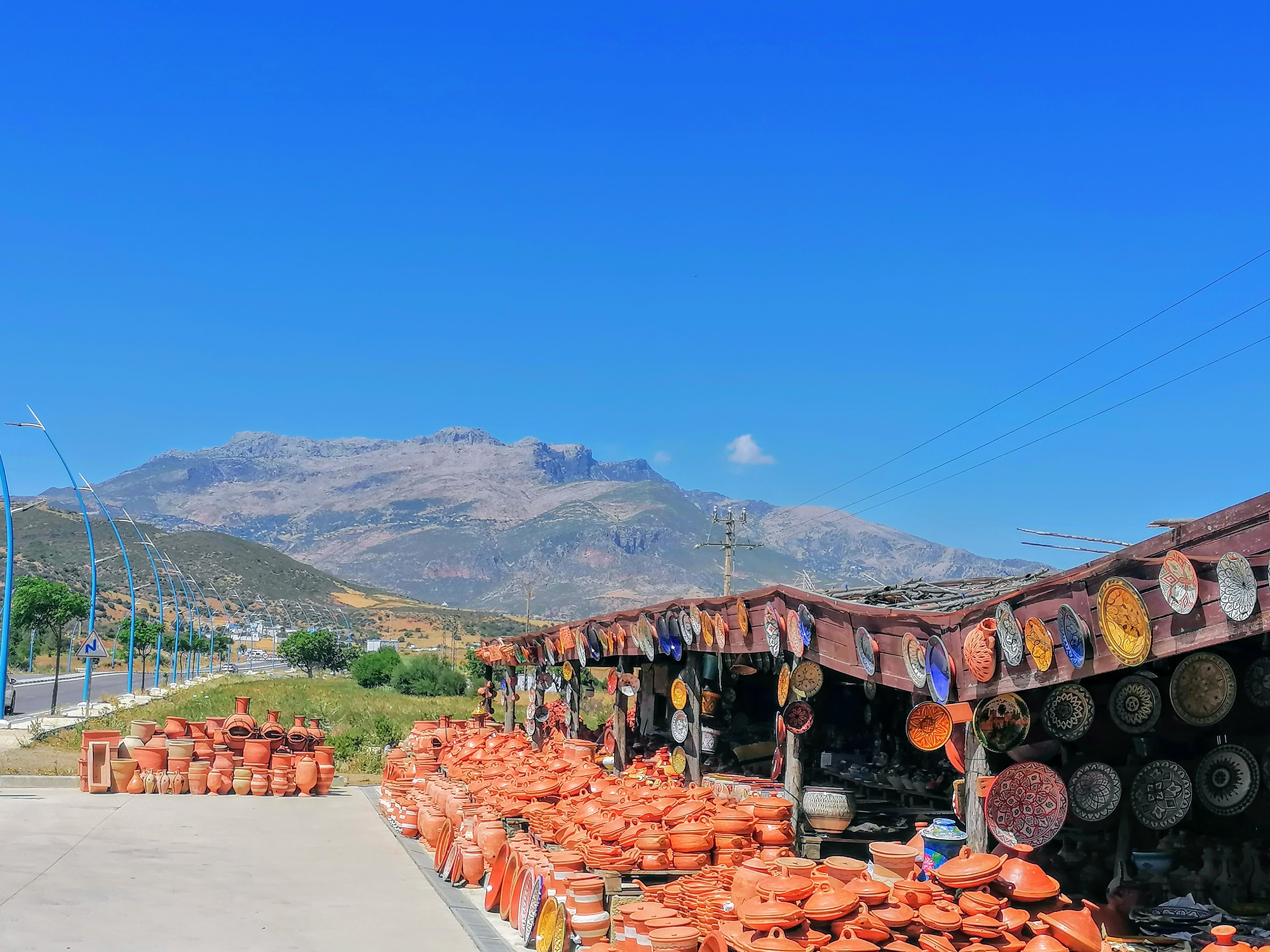
The Amazigh society showcases a remarkably rich historical heritage, encompassing language, culture, arts, beliefs, and crafts·wo·manship. In Morocco, this meaningful cultural heritage merges seamlessly with a distinct artisanal and visual style. From language and arts to crafts, tattooing, ceremonies, and beliefs, the Imazighen in Morocco uphold their traditions, passed down through oral communication for countless generations. The artistry of the Imazighen holds paramount importance, rooted in rural traditions where agricultural activities have always formed an integral part of their lives. Tasks were traditionally divided between individuals, with some dedicating themselves to agricultural tasks, and others taking charge of traditional productions such as weaving, notably woolen fabrics and Amazigh rugs, as well as engaging in crafts like basketry and pottery.
An Amazigh Museum was officially inaugurated in 2011, hosted in the former painting studio of Jacques Majorelle in Marrakech, Morocco. Showcasing over 600 artifacts spanning from the Rif to the Sahara desert, this cultural institution provides an extensive representation of the diverse indigenous tribes of North Africa. With origins dating back to the 18th century and extending up to the 1960s, these objects not only preserve the rich heritage of the Amazigh culture but also highlight their continued relevance in contemporary society.
 Samira Ibnelkaïd